


Stainless Steel Wall Panels for Commercial Kitchens
Apr 13th 2026
From busy restaurant lines to high-volume food processing facilities, stainless steel wall panels deliver the durability, hygiene, and compliance that commercial kitchens demand.
If you’re outfitting or renovating a commercial kitchen, the materials you choose for your walls matter far more than most operators realize. The wrong surface can harbor bacteria, crack under heat, absorb grease, and fail health inspections – costing you time, money, and your reputation.
At Waterloo Paneling, we’ve helped food service operators, facility managers, and contractors specify and source the right stainless steel wall panels for commercial kitchens of every size and type. This guide covers everything you need to know: grades, finishes, benefits, installation, maintenance, and how to choose the right panels for your specific application.
What Are Stainless Steel Wall Panels?
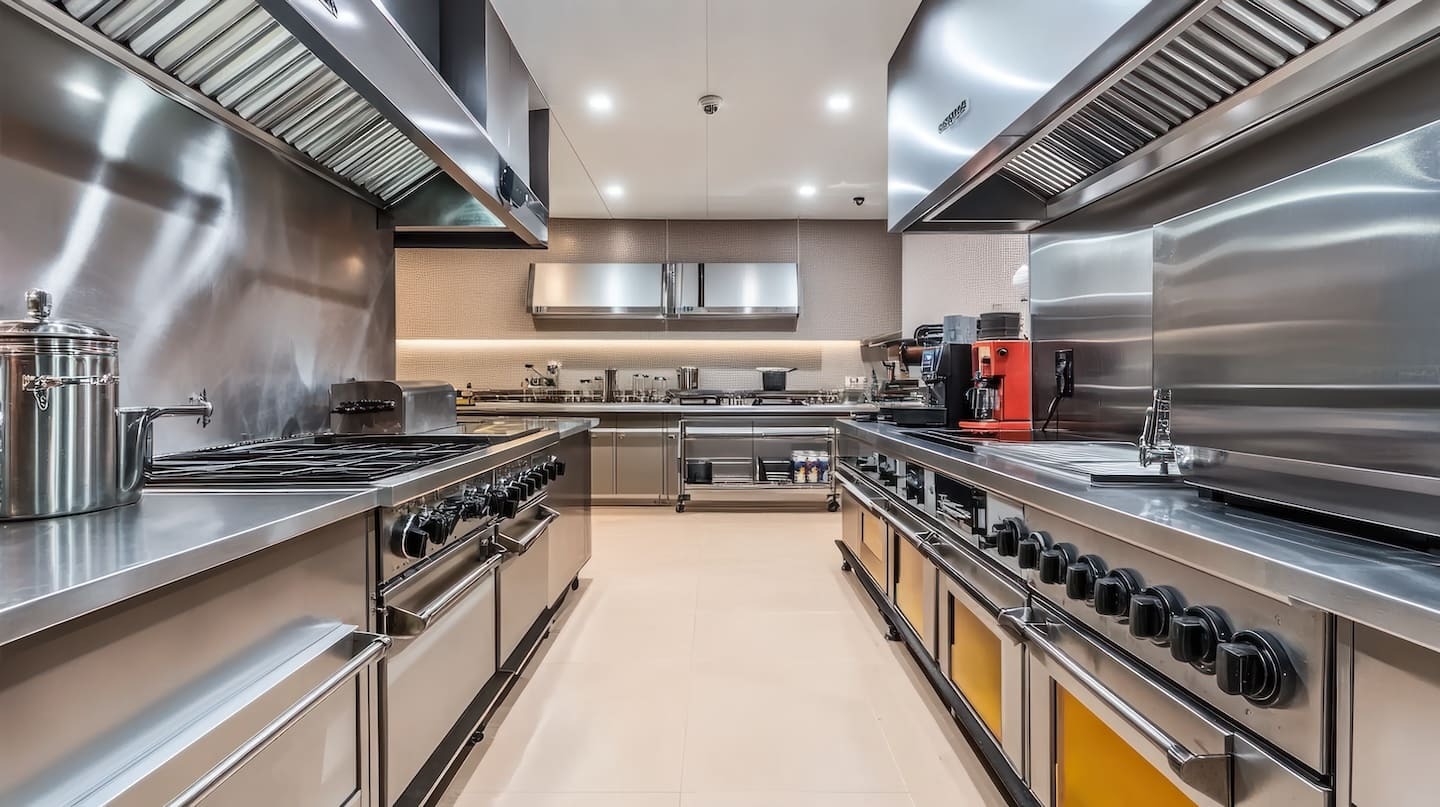
Stainless steel wall panels are flat or formed sheets of food-grade stainless steel – typically 16 to 22 gauge – that are fastened to wall surfaces in commercial food-preparation environments. They create a seamless, non-porous protective layer over substrates like moisture-resistant drywall, concrete block, or existing tile.
Unlike painted drywall, ceramic tile, or FRP (Fiberglass Reinforced Plastic), stainless steel wall panels are engineered specifically for the demands of professional kitchens: extreme heat, heavy cleaning chemicals, daily physical impact, and strict health code requirements.
Stainless steel earns its place in commercial kitchens because it satisfies all the critical surface criteria in one material: smooth, non-absorbent, easily cleanable, and corrosion-resistant – without the grout lines of tile or the chemical sensitivity of FRP.
Grades of Stainless Steel: Which Is Right for Your Kitchen?
Not all stainless steel is the same. The grade you specify will determine long-term corrosion resistance, compliance, and total cost of ownership.
Grade 304 – The Commercial Kitchen Standard
Grade 304 (also called 18/8 stainless) contains 18% chromium and 8% nickel, giving it excellent resistance to food acids, humidity, and most commercial cleaning chemicals. It’s NSF-listed, widely available, and cost-effective – making it the right choice for the vast majority of commercial kitchen wall panel applications, including cooking lines, prep areas, dishwashing zones, and walk-in cooler interiors.
Grade 316 – For High-Chloride & Coastal Environments
Grade 316 adds 2–3% molybdenum, providing dramatically improved resistance to chloride-based environments. Choose 316 for seafood processing plants, coastal restaurant kitchens, or any facility where high-concentration chlorine sanitizers are used routinely. Expect to pay a 20–40% premium over 304 – well worth it in the right environment.
Choosing the Right Finish
The surface finish affects both cleanability and compliance. Here’s how the most common finishes compare for commercial kitchen use:
- #4 Brushed Finish – The industry favorite. Directional satin grain hides minor scratches, wipes clean easily, and passes virtually every health inspection. Recommended for cooking lines, prep areas, and dishwashing zones.
- #2B Mill Finish – Smooth and semi-reflective. Excellent for food processing and clean room applications where surface texture needs to be minimal.
- #8 Mirror Finish – Highly reflective and visually striking, but shows fingerprints and requires more frequent wiping. Best reserved for front-of-house or display applications.
- Embossed / Patterned – Adds texture and visual interest. Suitable for decorative commercial applications but harder to sanitize thoroughly.
At Waterloo Paneling, we stock and custom-fabricate panels in all major grades and finishes. Our team can help you select the right specification for your kitchen’s exact environment.
Key Benefits of Stainless Steel Wall Panels for Commercial Kitchens

1. Superior Hygiene & Sanitation
Stainless steel’s non-porous surface gives bacteria, mold, and grease nowhere to hide – not even after years of daily use. Unlike ceramic tile (with its porous grout lines) or FRP (which can crack and harbor contaminants), a properly installed stainless steel wall panel maintains a continuous, washable surface that meets or exceeds FDA Food Code Section 4-101 requirements.
2. Chemical & Corrosion Resistance
Commercial kitchens rely on heavy-duty degreasers, quaternary ammonium sanitizers, and chlorine-based cleaners that would degrade painted surfaces within months. Grade 304 stainless handles all of these with ease. Grade 316 goes further, standing up to high-concentration chloride environments without pitting or surface breakdown.
3. Heat & Fire Resistance
Stainless steel is non-combustible and classified as a Class A surface material – the highest fire-resistance rating. It will not warp, blister, off-gas, or contribute to flame spread even when installed close to cooking equipment, making it a preferred material for local fire marshals and building inspectors.
4. Impact Resistance & Long-Term Durability
Between rolling carts, stacked pots, and the general daily chaos of a busy kitchen, walls take a beating. 16-gauge stainless steel wall panels handle routine impacts without cracking, denting easily, or delaminating – unlike painted drywall or FRP panels that can show damage within months of installation.
5. 20+ Year Lifespan
When properly installed and maintained, stainless steel wall panels routinely last two to three decades in commercial kitchen environments. That longevity makes the higher upfront investment significantly more cost-effective than repainting drywall every few years or replacing FRP panels that have cracked or discolored.
6. Health Code & NSF Compliance
NSF/ANSI 2-listed stainless steel wall panels satisfy health department requirements in virtually every U.S. jurisdiction. Having NSF documentation on-site during inspections streamlines approval and eliminates ambiguity about material compliance.
Stainless Steel vs. Other Commercial Kitchen Wall Options
Here’s how stainless steel compares to the most common alternatives operators consider:
- FRP Panels – Lower upfront cost, but shorter lifespan (10–15 years vs. 20–30 for stainless), more susceptible to cracking under impact, and less chemical-resistant. A reasonable choice for low-impact dry storage areas; not the right call for cooking lines or dishwashing zones.
- Ceramic Tile – Tile itself is non-porous, but grout is not. Many health departments now specifically require seamless or minimal-seam wall surfaces in high-risk food prep zones. Difficult and expensive to regrout or replace.
- Epoxy Paint – The lowest upfront cost, but realistically needs repainting every 3–7 years. Does not meet NSF surface standards in most jurisdictions. Not recommended for cooking lines or wet zones.
- PVC Wall Panels – Lightweight and easy to install, with decent chemical resistance. However, PVC has lower heat tolerance than stainless and can off-gas at high temperatures near open-flame equipment.
For high-use cooking lines, prep areas, and dishwashing zones, stainless steel is the clear choice on durability, compliance, and total cost of ownership.
Installation: What to Expect

Substrate Preparation
The wall surface must be clean, dry, flat, and structurally sound. Moisture-resistant drywall (cement board or “green board”) is the preferred substrate in wet zones. Remove all loose paint, grease residue, or damaged material before panels go up. A compromised substrate will cause panels to fail regardless of how well the installation is executed.
Fastening Methods
Stainless steel wall panels can be installed with mechanical fasteners (screws into studs), commercial-grade panel adhesive, or a combination of both. For most commercial kitchen applications, a combination approach – adhesive across the field area with mechanical fasteners at edges and corners – provides the strongest, longest-lasting installation and minimizes panel movement over time.
Seam Sealing – Non-Negotiable
Every seam, gap, and wall penetration must be sealed with an NSF-listed, food-safe silicone sealant. This is not optional – unsealed seams are one of the most common commercial kitchen health code violations and a primary harborage point for bacteria and pests. Budget for reseal inspections every 2–5 years.
Thermal Expansion Allowance
Always leave a 1/16” gap at panel edges and fill with food-grade silicone – not rigid caulk. Stainless steel expands and contracts with temperature changes in high-heat kitchen environments. Fully rigid, sealed edges without expansion room can cause panels to buckle or warp over time.
Equipment Clearance & Fire Code
Check local fire codes for required clearance between wall panels and open-flame cooking equipment. Most jurisdictions require a minimum 6-inch clearance or a listed Type I hood system. Your local AHJ (Authority Having Jurisdiction) is the final word on clearance requirements.
Cleaning & Maintenance
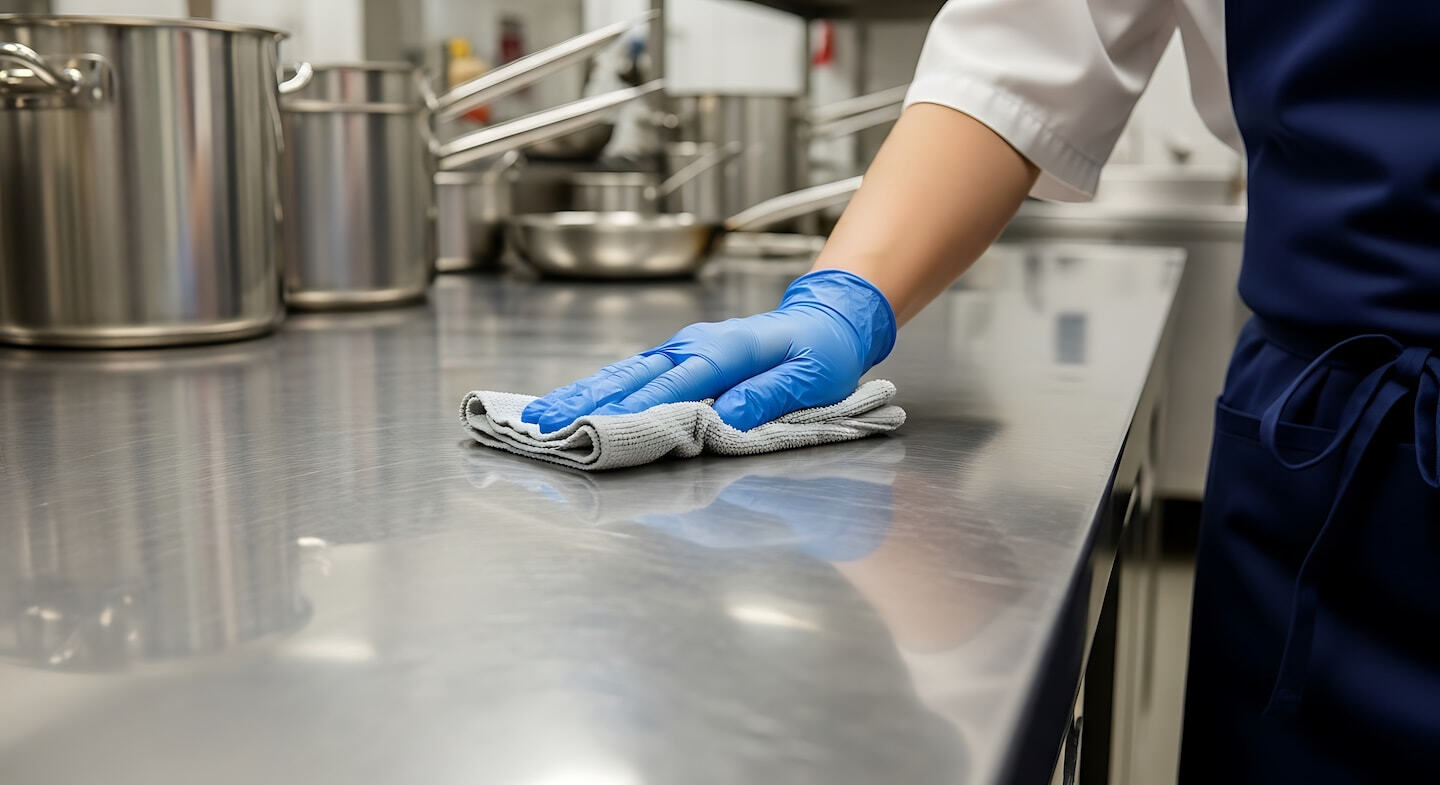
One of the biggest operational advantages of stainless steel wall panels is how little it takes to keep them in excellent condition. Unlike tile (which requires grout maintenance) or FRP (which stains), stainless wipes clean quickly with standard commercial cleaners.
Daily Cleaning Protocol
Wipe panels down with a food-safe degreaser and a microfiber cloth, always moving with the grain of the brushed finish – never in circular motions. Circular scrubbing creates micro-scratches that trap grease over time. Rinse with clean water and dry with a clean cloth or allow to air dry.
Weekly Deep Cleaning
Apply a commercial stainless steel cleaner or diluted chlorine sanitizer at manufacturer-recommended concentrations. Pay extra attention to seams, corners, and the areas directly behind cooking equipment. Inspect silicone seals for cracking or discoloration and note any areas that need resealing.
What to Avoid
- Steel wool or abrasive pads – cause micro-scratches and accelerate surface corrosion
- Bleach left in prolonged contact on 304-grade panels – use 316 in high-chlorine environments
- Cleaners containing iron particles or contact with non-stainless tools – causes rust transfer
- Cleaning against the grain – embeds debris and creates scratches that are harder to clean over time
Health Code & NSF Compliance
U.S. health departments reference the FDA Food Code and NSF/ANSI 2 when evaluating acceptable wall materials in commercial food prep areas. The core requirement is consistent: surfaces must be smooth, non-absorbent, non-toxic, and easily cleanable. Stainless steel satisfies all four criteria inherently.
Key Standards to Know
- NSF/ANSI 2 – The benchmark food equipment surface standard. Stainless steel panels carrying an NSF listing under this standard provide documented, inspector-ready proof of compliance.
- FDA Food Code Section 4-101 – Requires food-contact and food-splash surfaces to be smooth, non-absorbent, and easily cleanable. Stainless steel meets all three without exception.
- Local Fire Codes – Stainless is non-combustible and classified as Class A – the highest fire resistance rating. It’s a preferred wall material near open-flame cooking equipment in most jurisdictions.
Always pull permits and coordinate with your local health department and fire marshal before beginning installation. Having NSF certification documents for your panels on-site during inspections dramatically streamlines the approval process.
How to Buy: What to Look for in a Stainless Steel Wall Panel Supplier
When sourcing stainless steel wall panels for a commercial kitchen project, not all suppliers are equal. Here’s what to verify before placing an order:
- NSF/ANSI 2 listing or equivalent – demand documentation, not just verbal assurance
- Mill certifications confirming alloy grade (304 vs. 316) and gauge
- Country of origin and traceability documentation
- Custom sizing capability – fewer seams always means better sanitation and a cleaner finished look
- Lead times and availability – especially for large or time-sensitive renovation projects
- Technical support – a supplier who can advise on grade selection, installation method, and code compliance is worth significantly more than a commodity distributor
At Waterloo Paneling, we supply NSF-listed, mill-certified stainless steel wall panels in standard and custom sizes, with expert guidance at every step from specification through installation.
Frequently Asked Questions
How thick should stainless steel wall panels be for a commercial kitchen?
Most commercial kitchens specify 16- or 18-gauge panels. 16 gauge (approximately 0.060” thick) provides the best balance of dent resistance and weight for cooking lines and high-traffic zones. 20 gauge is acceptable for lower-impact areas like dry storage. Thinner gauges are not recommended for active food prep or dishwashing environments.
Can stainless steel wall panels be installed over existing tile?
Yes, in many cases. Panels can be mechanically fastened or adhesive-bonded over existing ceramic tile provided the tile is fully adhered, flat, and free of grease contamination. This approach saves significant demolition cost. Verify acceptability with your local health inspector before proceeding.
What is the difference between 304 and 316 stainless steel for kitchen walls?
Grade 304 handles food acids, humidity, and standard commercial cleaners – the right choice for most restaurant kitchens. Grade 316 adds molybdenum for superior chloride resistance and is recommended for seafood processing, coastal locations, or facilities using high-concentration chlorine sanitizers routinely.
How do I prevent rust spots on my stainless steel wall panels?
Surface rust on stainless steel is almost always “tea staining” – contamination from external iron particles transferred by steel wool, non-stainless tools, or nearby corroding equipment. Use only stainless-compatible cleaning tools, avoid prolonged chlorine contact on 304-grade panels, and passivate new panels with a citric acid solution in particularly harsh environments.
Are stainless steel wall panels required by health code?
Health codes require surfaces to be smooth, non-porous, easily cleanable, and non-absorbent – they don’t mandate stainless steel specifically. However, stainless is the most practical material that consistently satisfies all of these requirements across every U.S. jurisdiction. In high-splash cooking and prep zones, it’s by far the safest choice for passing inspections the first time.
Ready to Upgrade Your Commercial Kitchen Walls?
Whether you’re building a new restaurant kitchen from the ground up, renovating an existing facility, or replacing aging wall cladding that’s failing health inspections, Waterloo Paneling has the expertise and inventory to get your project done right.
We supply NSF-listed, mill-certified stainless steel wall panels in 304 and 316 grades, standard and custom sizes, in all major finishes – with expert guidance at every step.
► Get a Free Quote from Waterloo Paneling Today ◄
Contact our team to discuss your project requirements, request samples, or get a custom quote for your commercial kitchen wall panel installation.