

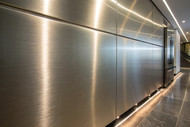
Stainless Steel Finish Guide: Which Surface Is Right for Your Application?
Apr 10th 2026
Finish affects far more than looks. The right stainless steel surface finish determines cleanability, compliance, maintenance burden, and how your panels perform over decades of real-world use.
When most people think about specifying stainless steel wall panels, they focus on grade — 304 vs. 316, corrosion resistance, NSF compliance. Those are critical decisions. But finish is the other half of the specification equation, and it’s one that’s frequently underestimated.
The finish you choose determines how easy the panel is to clean and sanitize, how visible scratches and fingerprints will be in daily use, how the surface interacts with light in your space, and in regulated food service environments, whether your installation will pass a health inspection.
At Waterloo Paneling, we help operators, designers, and contractors navigate finish selection every day. This guide covers every major stainless steel finish — what it looks like, how it performs, how it cleans, and exactly which applications it’s right for.
How Stainless Steel Finishes Are Created and Classified
Stainless steel finishes are created through a combination of rolling, annealing, pickling, and mechanical or electrochemical polishing processes applied at the mill or by a fabricator. The resulting surface is classified by a number or designation that describes its appearance and the process used to create it.
The most widely referenced classification system in North America is the ASTM A480 standard, which defines finish designations for flat-rolled stainless steel. In practice, the most commonly specified finishes for commercial and industrial wall panel applications fall into four main categories:
- Mill finishes — produced entirely by the rolling and annealing process, without additional mechanical polishing. The 2B finish is the most common mill finish for wall panel stock.
- Mechanical finishes — produced by grinding or polishing with abrasive belts or wheels after the base rolling process. The #3, #4, and #6 brushed finishes fall into this category.
- Polished finishes — produced by progressively finer buffing and polishing until a reflective surface is achieved. The #8 mirror finish is the ultimate polished finish.
- Specialty and custom finishes — embossed patterns, bead blasted textures, PVD coatings, and custom mill runs. Used in decorative and architectural applications where standard finishes don’t meet the design brief.
Understanding which category a finish falls into helps predict its cleanability, durability, and maintenance requirements — all of which matter significantly in commercial kitchen and food service environments.
2B Mill Finish: The Production Standard

What It Looks Like
The 2B finish is smooth, uniformly reflective, and has a slight sheen without being a true mirror. It has no directional grain — the surface appears consistent from all angles. Under close inspection it has a faint, fine texture from the cold-rolling process, but to the naked eye it reads as a clean, even metal surface.
How It’s Made
2B is produced by cold rolling the stainless steel to final gauge, annealing (heat-treating) to restore ductility, then skin passing — a final light cold-roll pass through smooth rollers that compresses the surface and gives it its characteristic smoothness and low sheen. No mechanical abrasives are used.
Cleanability & Sanitation
The 2B finish is one of the most sanitary finishes available for food service applications. Its smooth, non-directional surface has no grain channels or micro-ridges where bacteria, grease, or cleaning chemical residue can accumulate. It wipes clean quickly with standard commercial degreasers and sanitizers.
Because it has no directional grain, there is no “with the grain” cleaning requirement — staff can wipe in any direction without risk of embedding debris in surface grooves. This makes it particularly practical in high-throughput food processing environments where cleaning speed matters.
Best Applications for 2B Finish
- Food processing plants and production facilities where maximum surface smoothness is required
- Pharmaceutical and biotech manufacturing walls where contamination control is critical
- Clean room environments requiring minimal surface texture
- Walk-in cooler and freezer interiors where moisture resistance and wipe-down speed are priorities
- Any application where the panel will primarily be viewed in functional rather than aesthetic context
Limitations
The 2B finish shows fingerprints, water spots, and smudges more readily than brushed finishes because its smooth surface reflects light uniformly — any disruption to that uniformity is immediately visible. In high-touch or high-traffic areas where appearance is a consideration, the #4 brushed finish is a more practical choice.
#3 Finish: The Intermediate Grind
The #3 finish (sometimes called a “ground” finish) is produced by polishing the 2B surface with 100–120 grit abrasive belts, leaving a visible but relatively coarse directional grain. It is rarely specified for new commercial kitchen wall panel installations today — it has largely been superseded by the #4 finish, which provides a finer, more uniform appearance with equivalent or better cleanability.
Where you will still encounter #3 finish specifications is in older facility documentation, legacy equipment matching, and some industrial applications where a coarser surface texture is intentionally desired. If you’re matching existing panels in a renovation, verify the original finish before ordering — what was installed as a “#3” twenty years ago may have a different visual character than a current mill #3.
#4 Brushed Finish: The Commercial Kitchen Default
What It Looks Like
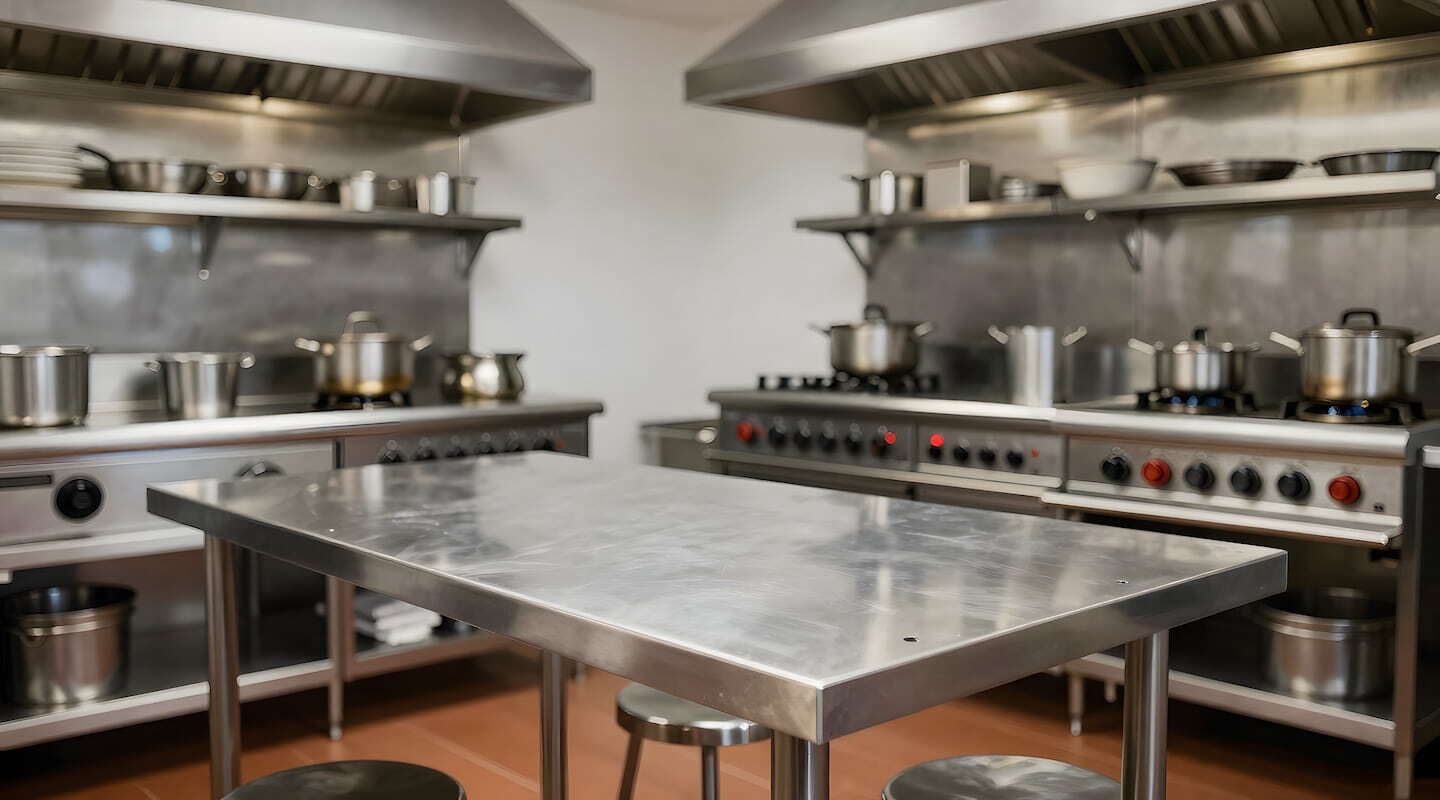
The #4 brushed finish has a fine, uniform directional grain that runs consistently along the length of the panel. It has a soft, satin sheen — reflective enough to look professional and clean, but not so reflective that it shows every fingerprint or smudge. Under different lighting conditions it reads as a warm, consistent metal surface.
How It’s Made
Starting from a 2B base, the panel is polished with 150–180 grit abrasive belts in a single direction, creating the characteristic parallel grain lines. The result is a finish with a consistent Ra (surface roughness) value that falls within the range specified by NSF and most health departments for food equipment surfaces.
Why #4 Is the Industry Standard for Commercial Kitchens
The #4 brushed finish dominates commercial kitchen wall panel specifications for good reason — it hits the ideal intersection of hygiene, durability, appearance, and practical maintenance:
- Sanitation — The fine directional grain is smooth enough to clean thoroughly with standard commercial degreasers and sanitizers. Unlike coarser finishes, the grain does not trap food particles or grease in deep grooves. NSF/ANSI 2 listed and FDA Food Code compliant.
- Scratch concealment — The directional grain pattern naturally conceals minor surface scratches from daily kitchen operation — cart collisions, utensil contact, cleaning pad abrasion. A #8 mirror finish shows every scratch; a #4 absorbs them visually into the existing grain pattern.
- Fingerprint resistance — The brushed texture diffuses reflected light, making fingerprints, water spots, and smudges far less visible than on smooth or mirror finishes. This reduces the frequency of cosmetic cleaning required to maintain a professional appearance.
- Health inspector acceptance — The #4 finish is explicitly cited in many health department guidelines as an acceptable food-contact and food-splash surface finish. Inspectors recognize it on sight; there is rarely any ambiguity about compliance.
- Aesthetic versatility — The satin, professional appearance of a #4 finish works equally well behind a cooking line, in a food prep area, or in a visible service corridor. It doesn’t draw attention to itself — it reads as clean, professional, and correct.
Cleaning the #4 Finish
Always clean #4 finish panels by wiping with the grain — in the same direction as the parallel brush lines. Wiping across the grain or in circular motions creates cross-grain micro-scratches that accumulate grease over time and become increasingly difficult to clean thoroughly. This is the single most common maintenance mistake with brushed stainless.
Use a food-safe degreaser and a microfiber cloth or soft non-abrasive pad. Rinse with clean water. For weekly deep cleaning, a commercial stainless steel cleaner applied with the grain restores the original appearance and removes any accumulated haze.
Best Applications for #4 Finish
- Commercial kitchen cooking lines and hood surrounds
- Food prep and dishwashing zone walls
- Restaurant and cafeteria kitchen perimeter walls
- Healthcare facility kitchen and food service areas
- Food processing facility walls and equipment surrounds
- School, university, and institutional kitchen walls
- Any NSF-regulated food-contact or food-splash surface application
#6 Finish: The Heavy Brushed Alternative
The #6 finish is similar to #4 in its directional grain but produced with coarser abrasives (typically 220 grit Tampico brush), resulting in a softer, more diffuse sheen with less reflectivity than a standard #4. It has a slightly dull, matte-like quality that some designers prefer for architectural applications where a less industrial look is desired.
When to Consider #6
- Commercial kitchen applications in hospitality environments where a softer, less clinical aesthetic is a design objective
- Architectural wall cladding in restaurants, hotels, and retail spaces where the visual character of a standard #4 reads as too utilitarian
- Environments where glare reduction on wall surfaces is a functional requirement (e.g., near display lighting)
Limitations of #6
The #6 finish is less commonly stocked than #4 and may require custom fabrication lead times. Its cleaning protocol is the same as #4 — always with the grain — and it meets the same NSF surface standards. Verify availability with your supplier before specifying.
#8 Mirror Finish: Maximum Reflectivity

What It Looks Like
The #8 mirror finish is exactly what the name suggests — a highly polished, fully reflective surface with virtually no surface texture visible to the naked eye. It reflects objects and light like a glass mirror. In a commercial space it creates a dramatic visual effect, making walls appear to recede and spaces feel larger.
How It’s Made
The #8 finish is produced by progressively buffing and polishing through increasingly fine abrasive compounds until the surface reaches maximum reflectivity. It begins with mechanical polishing and is finished with fine buffing compounds and rouge. The process is labor-intensive, which is reflected in the significant cost premium over brushed finishes.
The Practical Reality of #8 in Active Kitchens
The #8 mirror finish is visually compelling, but it is fundamentally impractical as a wall panel finish in active commercial kitchen environments for several reasons:
- Fingerprint visibility — Every touch, smudge, water drop, and grease splatter is immediately and prominently visible on a mirror surface. In an active kitchen, a #8 panel can look visibly dirty within minutes of cleaning.
- Scratch visibility — Every scratch, scuff, and surface mark is dramatically visible on a mirror finish in a way that it is not on a brushed surface. Daily kitchen operations will degrade the appearance of a #8 panel irreversibly within the first year of use.
- Maintenance burden — Keeping a #8 panel looking its best in a commercial kitchen requires constant cleaning — a significant ongoing labor cost that adds up quickly across a large installation.
- Cleaning product restrictions — Abrasive cleaners and scrubbing pads — common in commercial kitchen cleaning protocols — will permanently scratch and dull a mirror finish. Specialized cleaning products and soft cloths are required.
Where #8 Finish Is the Right Choice
The #8 finish earns its place in the right applications — just not behind a cooking line:
- Front-of-house service counters, host stands, and display cases where appearance is the primary requirement and direct food preparation contact is minimal
- Bar backs and beverage service areas where the reflective surface enhances the visual effect of lighting and glassware displays
- Elevator interiors, lobby features, and architectural accent panels in hospitality environments
- Retail display fixtures and high-end food service counter fronts
- Decorative column cladding and feature wall panels in restaurants, hotels, and commercial spaces
Specialty & Custom Finishes
Bead Blasted Finish
A bead blasted or shot blasted finish is produced by propelling fine glass or steel beads against the panel surface under pressure, creating a uniform matte texture with no directional grain. The result is a soft, non-reflective surface with a consistent, subtle texture that reads as modern and architecturally refined.
Bead blasted finishes are used primarily in architectural and hospitality applications where a non-directional matte texture is the design objective. Cleanability is good — the surface has no deep grooves — but verify with your local health authority before specifying in a regulated food preparation zone, as acceptance varies by jurisdiction.
Embossed & Patterned Finishes
Embossed finishes are produced by passing stainless steel through patterned rollers that imprint a repeating texture or geometric pattern into the surface. Common patterns include linen, diamond plate, wood grain, and custom geometric designs. These finishes are used primarily in decorative applications: elevator cabs, lobby features, retail fixtures, and decorative wall panels in hospitality environments.
Embossed finishes are not recommended for active food preparation areas. The pattern creates surface irregularities that are more difficult to sanitize thoroughly and may not satisfy health department requirements for food-splash surfaces. If you are considering an embossed panel in a kitchen-adjacent area, verify local health code acceptance before specifying.
PVD and Colored Finishes
Physical Vapor Deposition (PVD) coatings are applied to stainless steel panels to create colored finishes — gold, bronze, black, rose gold, and custom colors. The PVD coating is extremely hard and durable, resistant to scratching, and maintains its color under normal use conditions.
PVD-coated stainless panels are used in high-end hospitality, retail, and architectural applications where a specific color statement is required. They are not appropriate for active food preparation zones and are typically not NSF-listed for food contact applications. Cost is significantly higher than standard finishes — PVD is a specialty product for specific design applications, not a general commercial kitchen specification.
Finish Selection Guide by Application
Commercial Kitchen Cooking Line & Prep Walls
Specify: #4 Brushed Finish, Grade 304, 16 gauge. The #4 finish is the unambiguous correct choice for active cooking and food prep areas. It satisfies health code requirements, conceals operational wear, and is easy to sanitize with standard commercial cleaning protocols. No other finish comes close to matching its combination of hygiene, durability, and practical maintenance.
Dishwashing Zone Walls
Specify: #4 Brushed Finish or 2B Mill Finish, Grade 304, 16 gauge. Both finishes perform well in dishwashing zones. The 2B finish is slightly easier to clean at maximum thoroughness due to its non-directional surface; the #4 is more forgiving of minor scratches from racks and carts. Either is appropriate — choose based on your cleaning protocol and aesthetic preference.
Food Processing Facility Walls
Specify: 2B Mill Finish, Grade 304 or 316 (based on environment), 16 gauge. The 2B finish’s smooth, non-directional surface is the preference for food processing environments where maximum cleanliness and contamination control are the top priorities. Grade selection depends on the specific chemicals and conditions in the facility.
Walk-In Cooler & Freezer Walls
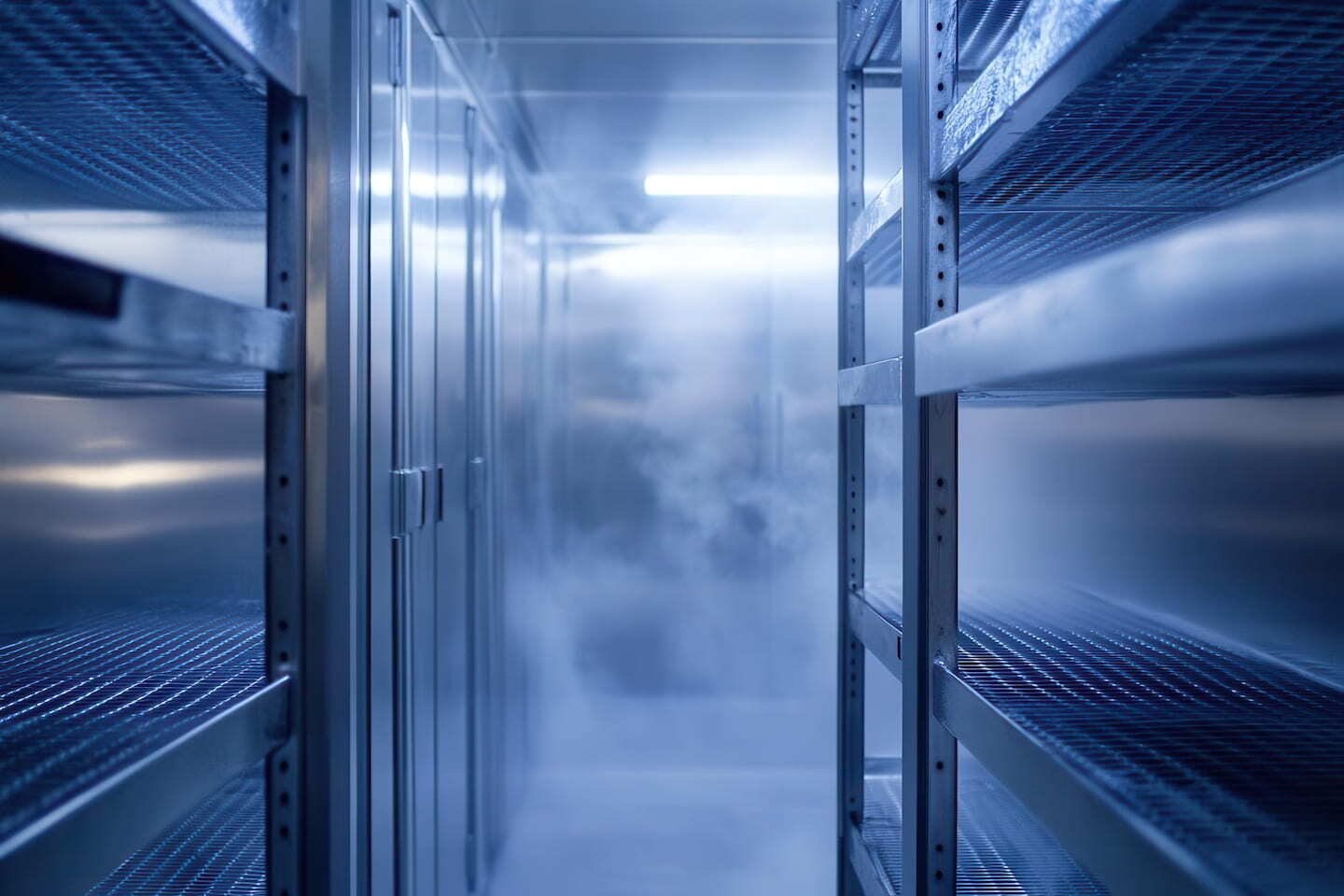
Specify: 2B or #4 Finish, Grade 304, 18–20 gauge. Lower-impact environments than active kitchens; 18 or 20 gauge is appropriate. Both 2B and #4 finishes are suitable. The 2B finish’s non-directional surface makes it slightly preferable for cooler interiors where condensation is a regular factor.
Front-of-House Service Areas & Display
Specify: #8 Mirror Finish or #4 Brushed, Grade 304, 18 gauge. The #8 mirror finish is appropriate where visual impact is the primary design objective and maintenance resources are available to keep it looking its best. The #4 brushed finish is the more practical choice where appearance and low maintenance must both be satisfied.
Architectural & Hospitality Feature Walls
Specify: #8 Mirror, Bead Blasted, Embossed, or PVD Finish, Grade 304, 18–20 gauge. Design-driven applications have the widest finish latitude. Select the finish that serves the design intent of the space. Work with your Waterloo Paneling representative to evaluate samples in the actual lighting conditions of your space before committing to a finish specification.
Finish and Grade: How They Work Together
Finish and grade are separate specifications that are determined by different criteria — but they must be considered together to arrive at the right panel for your application.
- Grade is determined by your environment’s corrosive demands: chemical exposure, chloride levels, humidity, and regulatory requirements. For most commercial kitchens, Grade 304 is correct. For high-chloride or coastal environments, Grade 316.
- Finish is determined by your application’s sanitation protocol, appearance requirements, and maintenance resources. For active food prep zones, #4 brushed or 2B. For display and decorative areas, #8 mirror or specialty finishes.
- Both 304 and 316 are available in all major finishes — 2B, #4, #6, and #8. Grade does not limit your finish options; it determines the corrosion resistance behind whatever finish you specify.
- The standard commercial kitchen specification — 16-gauge Grade 304 in a #4 brushed finish — is the correct combination for active food prep, cooking line, and dishwashing wall applications in the vast majority of U.S. commercial kitchen environments.
Frequently Asked Questions
What is the best stainless steel finish for a commercial kitchen?
The #4 brushed finish is the best stainless steel finish for commercial kitchen wall panels. It satisfies NSF/ANSI 2 and FDA Food Code surface requirements, conceals operational scratches better than any other finish, resists fingerprint visibility better than smooth or mirror finishes, and is straightforward to clean with standard commercial kitchen protocols. It is the default specification of experienced kitchen designers, contractors, and health inspectors across the United States.
What is the difference between 2B and #4 stainless steel finish?
The 2B finish is a smooth, non-directional mill finish produced without mechanical abrasives. It has a uniform, low-sheen appearance with no grain lines. The #4 finish is produced by polishing the 2B surface with fine abrasive belts, creating a directional satin grain. The #4 conceals scratches better and shows fingerprints less than 2B; the 2B is slightly easier to clean to maximum thoroughness and is preferred in food processing and clean room applications where contamination control is the top priority.
Will a #4 brushed stainless steel panel scratch easily?
Grade 304 and 316 stainless steel panels in a #4 finish are highly scratch-resistant relative to most wall materials, but stainless steel is not scratch-proof. Under heavy daily use in a commercial kitchen, minor surface scratches will occur over time. The practical advantage of the #4 brushed finish is that its directional grain pattern visually absorbs and conceals these minor scratches — they blend into the existing grain rather than standing out as bright marks against a smooth background. The #8 mirror finish, by contrast, makes every scratch immediately and permanently visible.
How do I clean a #4 brushed stainless steel finish without damaging it?
Always wipe with the grain — in the same direction as the parallel brush lines. Use a microfiber cloth or soft non-abrasive pad with a food-safe degreaser for daily cleaning. Rinse with clean water and dry to prevent water spots. For weekly deep cleaning, apply a commercial stainless steel cleaner with the grain and buff dry. Never use steel wool, abrasive scrubbing pads, or cleaners containing bleach at full concentration on #4 stainless panels.
Is a mirror finish (#8) appropriate for a commercial kitchen?
Not for active food preparation, cooking line, or dishwashing areas. The #8 mirror finish shows every fingerprint, smudge, water drop, and scratch immediately and prominently — making it virtually impossible to maintain a presentable appearance in an active kitchen environment without constant cleaning. It is the right choice for front-of-house display areas, bar backs, architectural features, and hospitality spaces where visual impact is the primary objective and a dedicated maintenance protocol is in place.
Can I specify different finishes in different areas of the same kitchen?
Absolutely, and it’s often the right approach. A common and well-executed specification is #4 brushed finish on active cooking line and prep area walls, 2B mill finish in the walk-in cooler, and #8 mirror or bead blasted finish on front-of-house service counter panels or architectural feature walls. Using the right finish for each zone maximizes both performance and appearance across the entire facility.
Need Help Choosing the Right Stainless Steel Finish?
Finish selection is a decision that affects every cleaning shift, every health inspection, and every year of service life for your wall panels. Getting it right upfront is far easier than correcting a misspecification after installation.
At Waterloo Paneling, we supply stainless steel wall panels in every major finish — 2B, #4, #6, #8, and specialty finishes — in both Grade 304 and 316, in standard and custom sizes. Our team can provide finish samples for evaluation in your actual space before you commit to a specification.
► Request Finish Samples or Get a Free Quote from Waterloo Paneling ◄
Contact our team to discuss your project application, request samples, or get a custom quote for your stainless steel wall panel installation.