

How to Specify Stainless Steel Wall Panels in Commercial Projects
Feb 11th 2026
How to Specify Stainless Steel Wall Panels in Commercial Projects
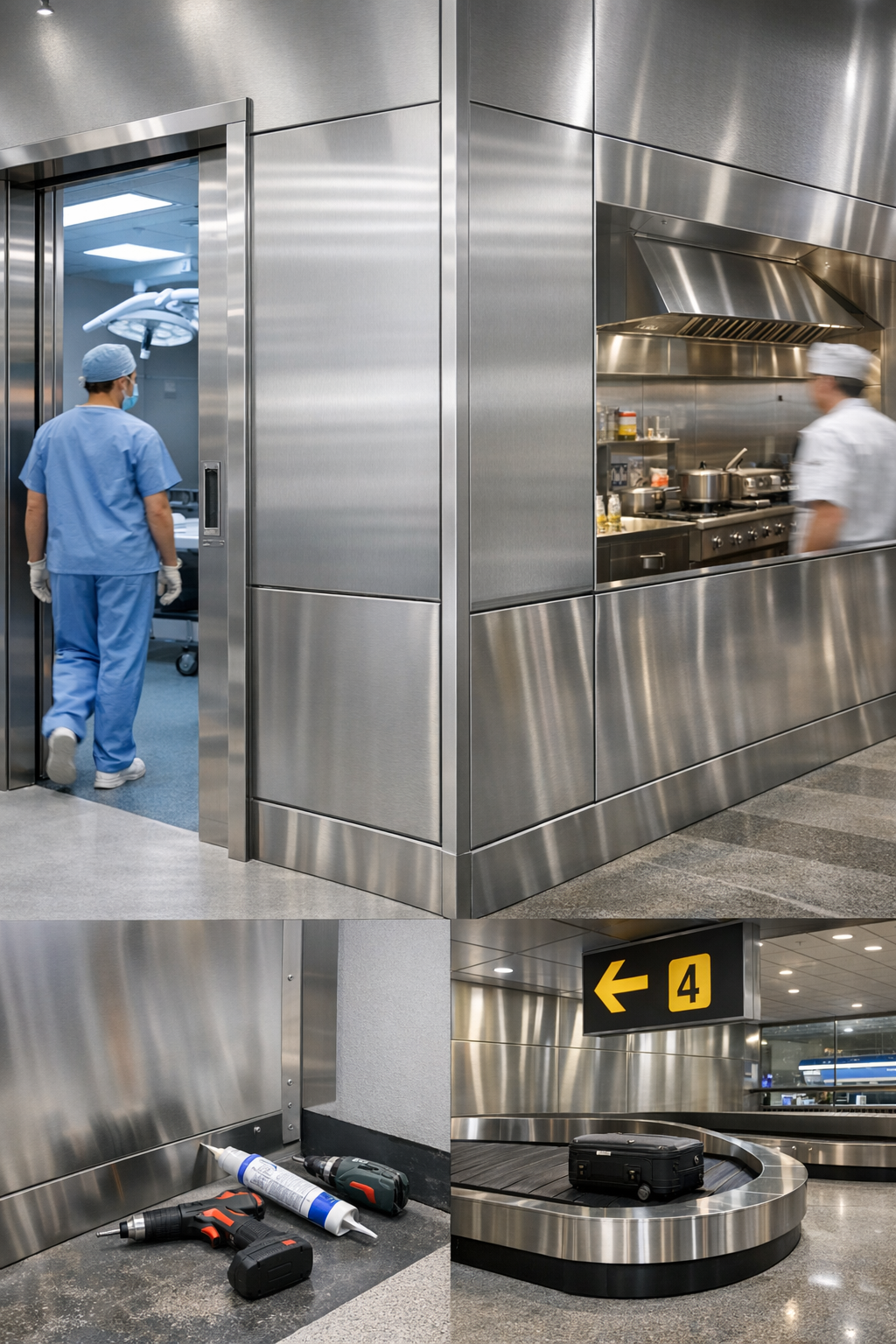
Stainless steel wall panels are increasingly specified in commercial projects for their durability, hygiene, fire performance, and sleek architectural appeal. From healthcare and commercial kitchens to transit hubs, laboratories, retail environments, and high-traffic corridors, stainless steel offers a unique combination of form and function.
However, specifying stainless steel wall panels correctly requires more than simply choosing “stainless steel” as a finish. Grades, finishes, thickness, fabrication methods, compliance standards, installation systems, and long-term maintenance must all be considered to ensure performance, longevity, and value.
This guide walks specifiers, architects, designers, and project managers through the key considerations when specifying stainless steel wall panels in commercial environments.
1. Define the Functional Requirements First
Before selecting material grades or finishes, start by identifying the project’s performance requirements. Ask:
-
Is the area high traffic or impact-prone?
-
Is moisture, humidity, or washdown expected?
-
Will the panels be exposed to chemicals or cleaning agents?
-
Is hygiene a critical requirement (e.g., healthcare, food prep)?
-
Is fire resistance a key compliance concern?
-
Is vandal resistance required?
The answers to these questions will guide your selection of grade, thickness, finish, and installation method.
For example:
-
A hospital corridor will require durability and easy cleaning.
-
A commercial kitchen will demand corrosion resistance and hygiene.
-
A transit station may prioritize impact and vandal resistance.
-
A laboratory may require chemical resistance.
Clear functional goals reduce the risk of under- or over-specifying the material.
2. Choose the Correct Stainless Steel Grade
Not all stainless steel is the same. The most common grades used for wall panels in commercial settings are:
Grade 304 (AISI 304)
-
The most widely used stainless steel.
-
Good corrosion resistance.
-
Suitable for most indoor commercial applications.
-
Ideal for corridors, lobbies, lift interiors, and general wall protection.
Grade 316 (AISI 316)
-
Contains molybdenum for enhanced corrosion resistance.
-
Recommended for:
-
Coastal environments
-
Areas exposed to harsh chemicals
-
Commercial kitchens
-
Food processing facilities
-
Laboratories
-
If your project involves exposure to salt air, aggressive cleaning agents, or constant moisture, Grade 316 is typically the safer choice.
Specification Tip:
Always clearly state the required grade in your specification. Avoid vague descriptions such as “stainless steel finish.” Instead, specify:
“Stainless steel wall panels, Grade 304 (or 316), thickness X mm, finish No. 4 (or specified finish).”
3. Determine the Appropriate Finish
The finish impacts aesthetics, maintenance, glare, and fingerprint visibility. Common finishes include:
No. 4 (Brushed/Satin Finish)
-
Most common architectural finish.
-
Directional grain.
-
Attractive, professional appearance.
-
Good at masking minor scratches.
-
Suitable for most commercial interiors.
2B (Mill Finish)
-
Smooth, reflective, industrial appearance.
-
Often used in back-of-house or service areas.
-
Less expensive but more utilitarian.
Mirror (No. 8)
-
Highly reflective.
-
Used for decorative features.
-
Shows fingerprints and scratches more easily.
-
Less common for high-traffic wall protection.
Bead-Blasted or Patterned Finishes
-
Matte, low-glare appearance.
-
Better at concealing fingerprints.
-
Ideal for high-touch environments.
Specification Tip:
Specify the direction of grain (e.g., vertical or horizontal). Inconsistent grain direction across panels can create visual inconsistencies on site.
4. Select the Correct Thickness (Gauge)
Thickness affects durability, rigidity, and impact resistance.
Common thicknesses for wall panels include:
-
0.9mm – Light-duty applications.
-
1.2mm – Standard commercial use.
-
1.5mm – Heavy-duty environments.
-
2.0mm+ – High-impact or anti-vandal settings.
In high-traffic corridors, transport hubs, or areas subject to trolley and equipment impact, thicker gauges reduce denting and improve long-term performance.
Important: Thinner sheets may oil-can (visibly distort) if not properly backed or installed. Ensure substrate preparation and fixing methods are suitable for the specified thickness.
5. Consider Fire and Compliance Requirements
Stainless steel is non-combustible, which makes it well suited for projects with strict fire safety requirements.
When specifying, confirm:
-
Compliance with local building codes.
-
Fire classification of backing materials and adhesives.
-
Smoke and toxicity requirements.
-
Any specific health sector or food industry standards.
In many jurisdictions, stainless steel panels can assist in meeting non-combustibility requirements for wall linings, but this depends on the complete wall system — not just the metal sheet.
Always specify the entire assembly, not just the panel.
6. Specify the Installation Method
Installation affects durability, appearance, and long-term maintenance.
Common installation methods include:
Adhesive Fixing
-
Clean, concealed installation.
-
Requires flat, properly prepared substrate.
-
Ensure adhesive is compatible with stainless steel and fire-rated where necessary.
Mechanical Fixing
-
Screws or rivets visible or concealed.
-
Suitable for heavy-duty or impact-prone areas.
-
Easier panel replacement.
Hook-On or Cassette Systems
-
Panels fabricated with returns and stiffeners.
-
Allow removal and access behind walls.
-
Ideal for service corridors or areas requiring future access.
Specification Tip:
State whether panels require:
-
Returns on edges.
-
Welded corners.
-
Pre-formed profiles.
-
Shadow gaps or trims.
Clearly define tolerances and alignment requirements to avoid site disputes.
7. Address Hygiene and Cleanability
In healthcare, food service, and laboratory settings, hygiene is a primary driver.
Stainless steel offers:
-
Non-porous surface.
-
Easy cleaning.
-
Resistance to bacteria growth.
To maximize hygiene:
-
Minimize joints and seams.
-
Specify welded and polished seams where appropriate.
-
Use coved junctions at floor intersections.
-
Avoid exposed fixings where possible.
Also consider how cleaning chemicals may affect the chosen grade and finish. Some aggressive cleaning agents can damage lower-grade stainless steel over time.
8. Plan for Impact Protection
In commercial projects, stainless steel wall panels are often used as protective wall cladding in:
-
Hospital corridors
-
Loading docks
-
Service corridors
-
Commercial kitchens
-
Retail back-of-house areas
If the purpose is protection, consider:
-
Full-height panels vs dado-height protection.
-
Integration with crash rails or handrails.
-
Reinforced backing boards.
-
Edge protection trims.
Over-specifying can increase cost unnecessarily, but under-specifying can lead to premature damage and replacement.
9. Detail Expansion and Movement
Metal expands and contracts with temperature changes.
In large installations:
-
Allow for movement joints.
-
Avoid overly rigid fixing that causes buckling.
-
Coordinate with structural movement joints.
Failure to account for expansion can result in visible distortion or panel failure over time.
10. Ensure Fabrication Quality
High-quality fabrication is critical to achieving a premium finish.
Key considerations:
-
Laser-cut accuracy.
-
Clean, consistent grain direction.
-
Protective film applied during transport.
-
Proper packaging to prevent site damage.
Include requirements for:
-
Shop drawings.
-
Sample panels for approval.
-
Finish consistency across batches.
Requesting a physical sample before final approval helps avoid misunderstandings.
11. Coordinate with Other Trades
Stainless steel wall panels often interface with:
-
Door frames
-
Skirting
-
Lift architraves
-
Handrails
-
Services and penetrations
-
Signage
Ensure:
-
Clear detailing of penetrations.
-
Templates for electrical outlets and fixtures.
-
Alignment with adjacent finishes.
Poor coordination can lead to site cutting, which damages the finish and voids warranties.
12. Specify Maintenance Requirements
Even though stainless steel is low-maintenance, it is not maintenance-free.
Include guidance in your project documentation:
-
Use non-abrasive cleaning cloths.
-
Avoid steel wool.
-
Clean in the direction of the grain.
-
Use appropriate stainless steel cleaners.
In high-touch areas, consider finishes that reduce fingerprint visibility.
A clear maintenance strategy protects both aesthetics and long-term performance.
13. Balance Cost and Lifecycle Value
Stainless steel wall panels may have a higher upfront cost compared to laminate, PVC, or painted systems. However, they typically offer:
-
Longer lifespan.
-
Lower replacement frequency.
-
Reduced maintenance costs.
-
Superior fire performance.
-
Better impact resistance.
When evaluating cost, consider lifecycle performance rather than initial material price alone.
Example Specification Clause (Simplified)
To reduce ambiguity, your specification might read:
Provide stainless steel wall panels, Grade 316, 1.2mm thick, No. 4 brushed finish, grain direction vertical. Panels to be fabricated with returned edges and mechanically fixed to prepared substrate. Provide shop drawings for approval prior to manufacture. All panels to comply with relevant fire and building code requirements.
This level of clarity minimizes interpretation errors.
Common Specification Mistakes to Avoid
-
Failing to specify the grade.
-
Not defining thickness.
-
Ignoring fire compliance of adhesives/backing.
-
Overlooking expansion allowances.
-
Forgetting to specify grain direction.
-
Relying solely on appearance without considering performance.
-
Allowing site cutting that damages finish.
Avoiding these mistakes ensures your stainless steel wall panel system performs as intended.
Final Thoughts
Specifying stainless steel wall panels in commercial projects requires a careful balance between aesthetics, durability, compliance, and cost. When properly selected and detailed, stainless steel provides an exceptionally robust and visually refined wall solution that performs in some of the most demanding environments.
By clearly defining performance requirements, selecting the correct grade and finish, coordinating installation methods, and addressing compliance and maintenance early in the design process, specifiers can deliver a solution that stands the test of time.
In high-traffic, hygiene-critical, or fire-regulated environments, stainless steel wall panels are not just a design feature — they are a long-term asset.
- rer audience
-
Add internal linking suggestions
-
Or tailor it to a specific sector (healthcare, education, transport, hospitality)